

Reaffirming Immigration Law’s Validity and the State’s Monopoly on Violence
The fatal shooting of Renee Nicole Good is a reminder of the state’s monopoly on the legitimate use of violence and recalls the fallacy of the slogan “no one is illegal on stolen land.”

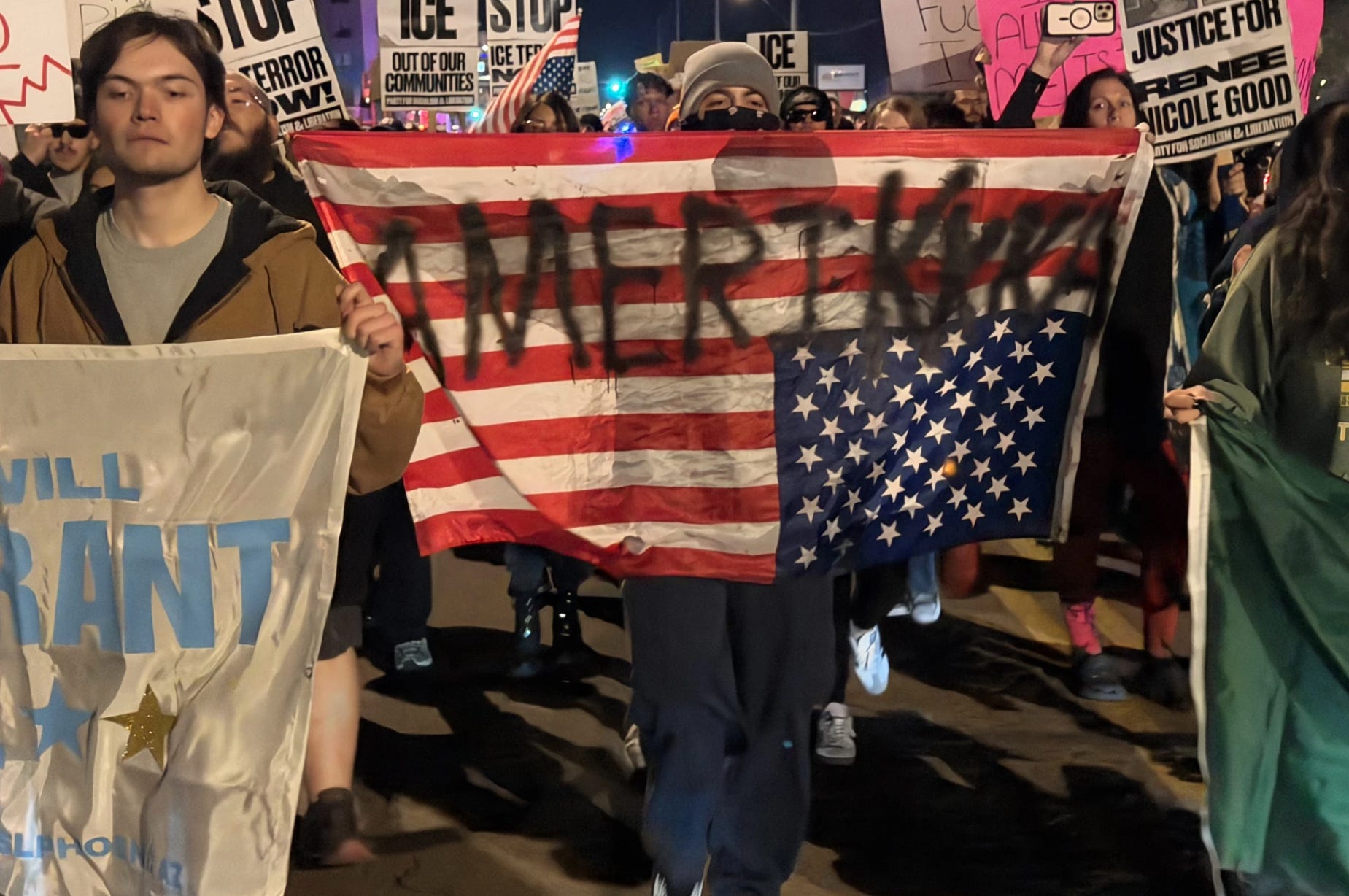
Immigration- and law enforcement-related unrest is heating up once again, with demonstrators across the country protesting the shooting of Renee Nicole Good after the activist drove her vehicle towards a federal agent on Wednesday in Minneapolis. Leftists claim that the use of force was unnecessary while conservatives generally consider it to be justified.
Although somewhat open to interpretation, videos of the incident depict Good apparently using her vehicle to block traffic and impede Immigration and Customs Enforcement’s operations in the neighborhood — which was confirmed by a fellow activist as her goal — and then attempting to drive off when confronted by ICE agents who demanded that she exit her vehicle.
It’s not entirely clear whether she intended to harm the officer, who was later identified as Jonathan Ross, or whether his use of deadly force was absolutely necessary, but what is clear is that there is — at the very least — a strong self-defense claim to be made by the ICE agent. She did, after all, accelerate her vehicle toward Ross and lightly strike him, providing ample reason to believe that she posed a danger to his life, regardless of her actual intent.
It is also possible that Ross was hyper-aware of the imminent danger he was in due to a prior encounter with a motorist he was trying to arrest for an immigration violation. In June 2025, Ross was dragged approximately 100 yards by the fleeing suspect’s vehicle during an arrest in Bloomington, Minnesota. In this incident, Ross suffered injuries that required dozens of stitches, and the suspect was later convicted of assaulting a federal officer with a deadly weapon.
Whether Ross was more on edge than usual because of his previous traumatic experience, or whether or not he was entirely justified in using deadly force against Good, at minimum, it was clearly a poor decision on her part to accelerate her vehicle with an armed law enforcement officer in front of her, one that could easily be mistaken for a “suicide by cop” scenario.
Nevertheless, leftists have taken to the streets in protest, shouting slogans that openly call for the murder of ICE agents in retaliation, and are using social media to issue death threats. “We will get justice for a fallen comrade,” said one antifa militant, “whether it be judicial justice or street justice.” They even attacked the Renaissance Hotel in downtown Minneapolis after hearing that ICE agents were staying there, breaching the entrance, damaging the lobby and spray painting the building with “Fuck ICE” slogans.
Beyond ginning up unrest, activists are also exploiting the incident to advance a radical, far-left narrative about the illegitimacy of immigration law, with thousands in Minneapolis this week chanting “Rise up, take a stand! No one’s illegal on stolen land!”
The increasingly confrontational activism is inspired by demonstrators’ convictions that they have the right to impede the enforcement of federal laws duly adopted by Congress in the name of human rights, particularly migratory rights, because America’s institutions are illegitimate to begin with — forged by genocidal colonists who stole the land from its original inhabitants and established a tyrannical government based on white supremacy.
What this radical leftist narrative often comes up against, however, is the cold-hard reality that laws exist in spite of their worldview and that federal officers are authorized to protect themselves when their safety is placed in jeopardy.
A Growing Trend
For months, government officials such as Department of Homeland Security Secretary Kristi Noem and Border Czar Tom Homan have repeatedly warned activists that they must not impede law enforcement or in any way harm — or even touch — ICE agents carrying out their duties. Activists, however, continue to push the limits and adopt increasingly confrontational tactics such as physical obstruction, vandalism, and violence.
Activists have frequently used vehicles as tools to obstruct ICE operations, turning them into improvised barriers or weapons. This tactic has surged over the past year, with DHS reporting more than double the vehicle ramming attacks against officers compared to prior years, with motor vehicles becoming a “tool of choice” for hindering arrests. Just two months ago, DHS warned that “these attacks not only pose a potentially fatal risk to officers but also endanger the public.”
With their lawful missions being impeded and agents coming under threat, ICE and Border Patrol agents are increasingly forced to not only contend with the difficulties of carrying out arrests of illegal aliens but also the challenges of unhinged activists who have no sense of boundaries or even self-preservation.
The violent confrontations between ICE agents and activists over the past year raise fundamental questions of legitimacy when it comes to the federal government’s actions. But while on principle leftists may reject the authority of the federal government to enforce national borders and remove illegal immigrants, they frequently receive reality checks in the form of pepper spray in the face or the cramped confines of a jail cell.
In total, hundreds of activists have been arrested over the past year and now face charges ranging from trespassing and failure to comply with orders to more serious cases of assault on federal officers and throwing incendiary devices, as well as felony arson, assault with a deadly weapon, and material support for terrorism.
Despite these serious legal repercussions, open-borders advocates continue their campaign of chaos, insisting that their actions are righteous and justified, and claiming that they are simply attempting to defend their communities against an overreaching federal government.
Beyond that, they also explicitly challenge the very legitimacy of immigration laws and the government’s authority to enforce them, basing their anarchistic philosophy on a radical interpretation of history and law.
No One is Illegal?
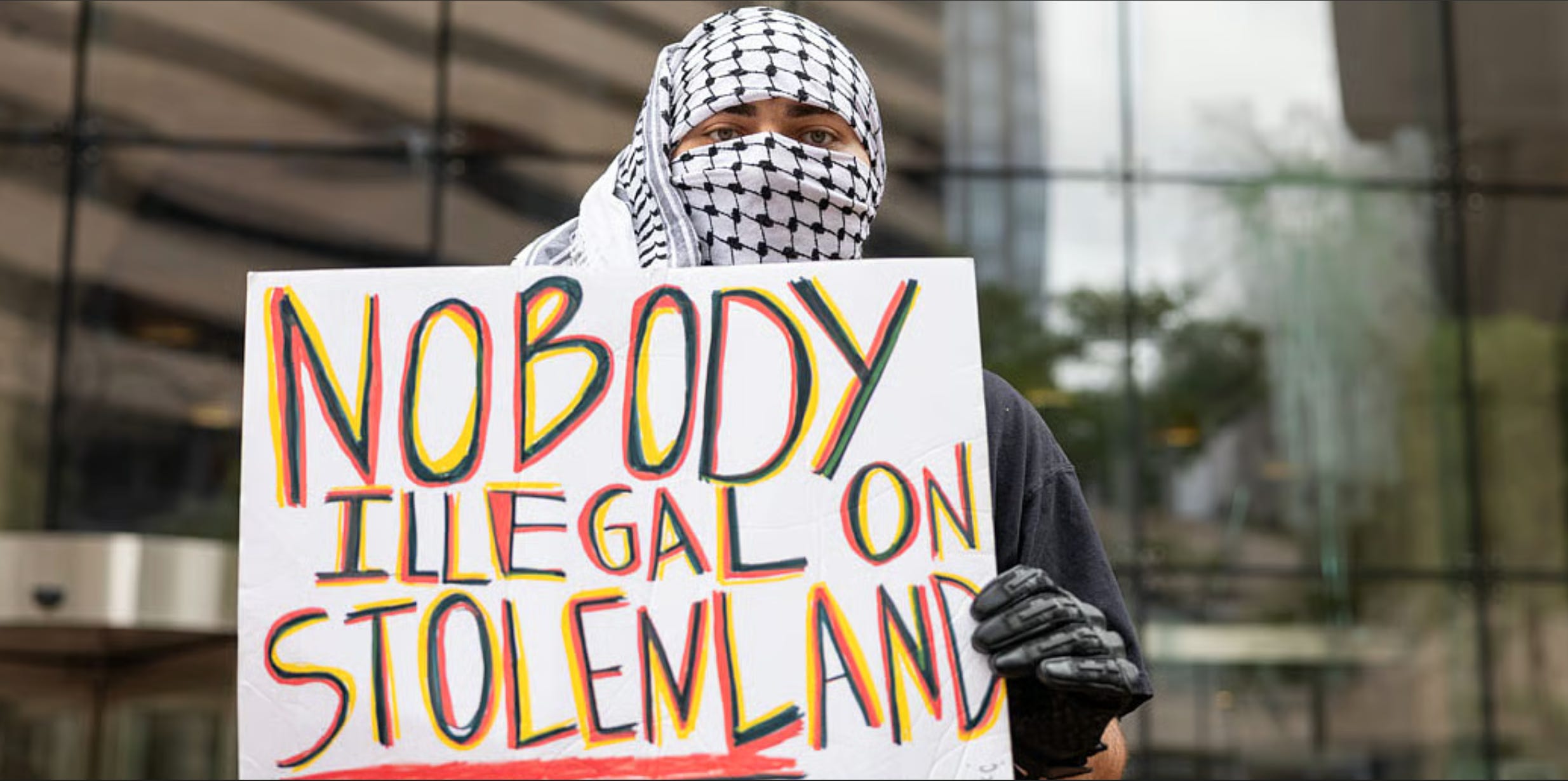
With the slogan “no one is illegal on stolen land” becoming the go-to argument of this movement, the underlying premise of anti-ICE activists is that a nation built on “stolen” land cannot legitimately exclude newcomers seeking entry, as the original act of settlement itself was an illegitimate invasion.
Like many political slogans, however, the assertion that “no one is illegal on stolen land” tends to simplify a complex historical and political reality by appealing to emotionally charged rhetoric, eliciting and exploiting a sense of moral indignation, guilt and sympathy rather than providing a rational argument against the enforcement of federal immigration law.
While there is no denying the tragedies endured by Native American populations, which for generations suffered from disease, displacement, military campaigns, cultural erasure, and ethnic cleansing policies like the Trail of Tears, extending this history to declare all border enforcement illegitimate is absurd. The concept is not only fraught with logical inconsistencies and historical oversimplifications but also applied highly selectively.
If it were applied consistently, of course, the epithet of “stolen land” would cover most countries around the world, as well as some of the Native American populations themselves.
Inter-tribal conflicts involving conquest, territorial expansion, and dispossession were quite common among Native American tribes in North America, often driven by competition for resources like hunting grounds, trade routes, or access to goods. These occurred both before and after European contact, sometimes exacerbated by the introduction of horses, firearms, and shifting alliances.
Throughout the 17th century, for example, the Beaver Wars dominated life in the Great Lakes region. In these conflicts, the Iroquois Confederacy sought to dominate the fur trade by conquering other tribes’ territories through raids that killed warriors, captured thousands for adoption or enslavement, and dispersed survivors. The result was the Iroquois seizing Huron lands in what is now southern Ontario.
A similar dynamic played out in the 18th and early 19th centuries, as the Lakota migrated westward, expanding their territory through conflicts with neighboring tribes, often facilitated by horses and guns acquired via trade with whites. They pushed the Omaha aside during southward migrations, displacing them from parts of the Central Plains, and in the Republican River Valley (now Nebraska and Kansas), the Lakota clashed with the Pawnee over prime hunting lands.
The Lakota also fought for control of the Black Hills and surrounding areas in the Northern Plains, becoming the dominant force in that region by the early 1800s through battles that resulted in territorial gains at the expense of the Crow, Kiowa, and Cheyenne.
The Comanche, after migrating southward from the Rocky Mountains in the 18th century, established dominance over the Southern Plains spanning parts of Texas, New Mexico, Oklahoma, and Kansas by conquering and dispossessing other tribes. They displaced the Apache from key territories through relentless warfare and raids, pushing them eastward and southward by the mid-1700s and claiming the fertile grasslands for horse herds and bison hunting.
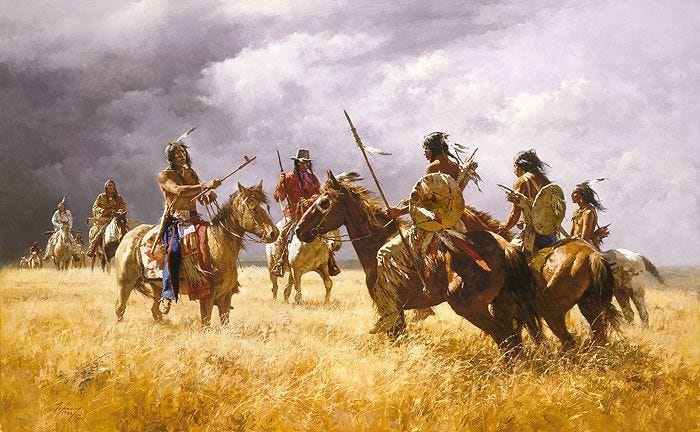
The Comanche, who were known for exceptionally brutal tactics, also raided and pressured Pueblo peoples in the Southwest, dominating trade routes and resources while expanding their nomadic empire at the expense of these groups until U.S. military campaigns in the mid-19th century.
In short, America’s indigenous inhabitants have been stealing the land from each other for centuries. It therefore makes no sense to hold European settlers to a different standard for allegedly “stealing” land from Native Americans or assert that these centuries-old conflicts should have any bearing on current legal matters.
Ultimately, a nation’s founding history is irrelevant to its contemporary authority to establish control over its borders and immigration procedures.
Founding History and Contemporary Legitimacy
If all nations were held to that standard, in fact, it would mean that most of the world’s peoples have no authority to control their borders. This is because most nations around the world have origins involving some form of conquest, territorial expansion, or dispossession of prior inhabitants at some point in their historical formation.
Rather than being an aberration that undermines the legitimacy of the United States and nullifies its borders, this is actually a near-universal pattern in state-building spanning the epochs of human history, as nation-states typically emerged through warfare, migration, unification of disparate groups, or colonial processes that displaced or subjugated existing populations.
This is not only the case in so-called settler-colonial states such as Canada, Australia and New Zealand, but can also be seen across Europe, Asia, Africa, and elsewhere. Examples include Roman, Ottoman, Mongol, and Arab expansions, as well as European unifications and ancient migrations such as Bantu expansions in Africa.
Indeed, pick any place on a world map and chances are you will find a state formed through internal or external conquests, dynastic wars, or migrations that dispossessed earlier groups.
Leftists and open-borders advocates in the United States, however, not only ignore this broader context but also tend to highlight the supposedly unique evil of America’s founding. To do so, they readily point to America’s founding documents, such as the Declaration of Independence, which they claim contains language that provides evidence of genocidal intent, thereby rendering illegitimate the U.S. government and its authority to enforce immigration law.
A focal point for critics has long been the Declaration’s final grievance against King George III: “He has excited domestic insurrections amongst us, and has endeavoured to bring on the inhabitants of our frontiers, the merciless Indian Savages, whose known rule of warfare, is an undistinguished destruction of all ages, sexes and conditions.”
The phrase “merciless Indian Savages” has not aged well, to say the least, and advocacy groups like the Center for Native American Youth argue that it reflects a worldview that enabled “degrading, looting, enslaving and committing mass cultural genocide of Indigenous peoples.” Some go further than that, arguing that the language confirms that borders are fundamentally illegitimate.
An Instagram user states: “Oh, you didn’t know the Declaration of Independence called us ‘the merciless Indian savages’? ... NO ONE IS ILLEGAL ON STOLEN LAND!!!” Another Instagram post directly excerpts the grievance’s wording to challenge the moral authority of U.S. borders: “The Declaration of Independence was adopted on the ... merciless Indian Savages ... Dear America: No One Is Illegal on Stolen Land.”
In the “Native American Warriors” group on Facebook, a post notes that “before there were borders, there were nations and they’re still here,” urging America to “acknowledg[e] Indigenous history” and “respect Native sovereignty.”
While perhaps sincerely held, these widespread sentiments reflect a deeply imperfect understanding of the past colored by historical grievances and a bias known as presentism, or the interpretation of past events, people, or ideas solely by modern values, standards, and knowledge, without considering the historical context in which they occurred.
To be sure, by contemporary standards, the term “merciless Indian savages” is offensive and dehumanizing, but the reality is that applying modern sensibilities to this historical phrase detaches it from its actual meaning.
Rather than being indicative of inherent racism or genocidal foreshadowing, the language reflects the reality of frontier warfare, the politics of the American Revolution, and deep-seated cultural differences between whites and Indians.
Native customs, for instance, clashed violently with European norms. Practices like ambush warfare, gauntlets, slow burning, or targeting non-combatants horrified settlers, reinforcing their stereotypes of “savages.” This mutual incomprehension fueled cycles of retribution and violence, ultimately leading to the Natives’ defeat and displacement.
Brutal Frontier Reality
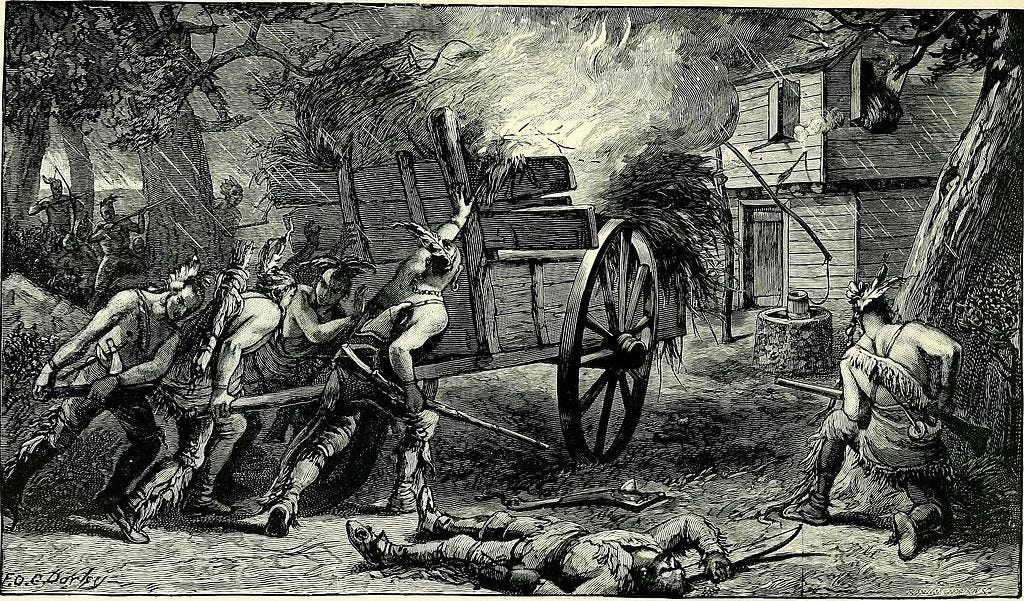
Pre-revolutionary conflicts had set the tone for Thomas Jefferson’s choice of words in the Declaration of Independence, events such as the 1622 Powhatan attack on Jamestown which killed 347 through deception and mutilation and King Philip’s War (1675–1676) that set new precedents for atrocities.
In this conflict, Wampanoag and allies raided New England towns, burning homes, slaughtering livestock, and subjecting captives to prolonged torment. Accounts describe rape, mutilation, and trophy-taking, with fingers prized for necklaces and human skin for belts. Around 2,500 to 3,000 colonists died, making it the deadliest conflict per capita in American history, with potentially 30 percent of New England’s English population affected.
With colonists subjected to “exquisite Torments” by the Natives, many were left with lasting fear and hatred, with survivors viewing Native warriors as “devils inspired by Satan.”
Similar patterns persisted into the American Revolution. Lord Dunmore’s War (1774) stemmed from atrocities like the Yellow Creek Massacre and subsequent Native retaliations. Cherokee attacks in 1776 killed and mutilated dozens; settlers responded with scorched-earth campaigns burning towns and crops.
The Declaration’s 27th grievance, in particular, directly accused the British Crown of inciting indigenous attacks on colonial frontiers, which was not rhetorical exaggeration but an explicit response to British policy. The 1763 Royal Proclamation had prohibited settlement west of the Appalachians to appease indigenous allies after the French and Indian War — a restriction deeply resented by land-hungry colonists.
As tensions escalated into open rebellion, British officials actively armed and encouraged tribes to raid American settlements, aiming to divert rebel resources and punish independence supporters.
Most Native nations aligned with the British, perceiving them as a buffer against unchecked American expansion. The Iroquois Confederacy divided, with the Oneida and Tuscarora siding with patriots, but the majority (Mohawk, Seneca, Cayuga, Onondaga) fighting for the Crown. In the South, Cherokee leaders like Dragging Canoe launched offensives in 1776, assured by British agents they could enforce the Proclamation line and seize settler property.
These alliances produced brutal frontier warfare. Raids targeted civilian settlements, involving scalping, torture, and killings without regard for age or sex — practices embedded in some tribal traditions as rituals of mourning, revenge, and warrior status. To settlers, this appeared as indiscriminate terror and recalled a long history of Indian atrocities endured by their forefathers.
Founders’ Nuanced Views on Native Americans
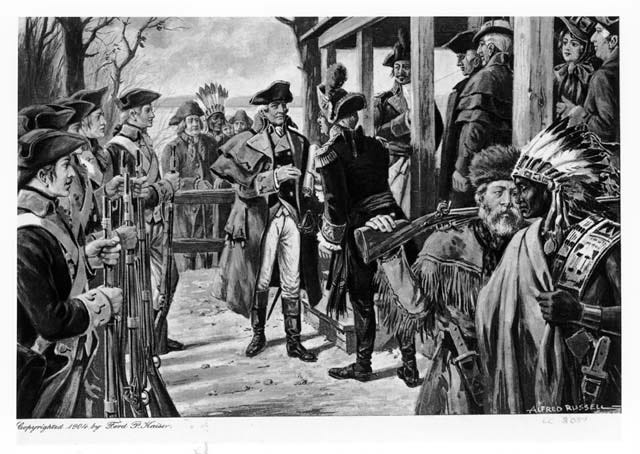
Jefferson’s words, drafted amid these events, reflected frontier settlers’ lived experiences. The phrase accused the King of “exciting” such violence, serving as propaganda to unify colonists against Britain, but it was not used lightly. Indeed, the phrase was approved by a committee including Benjamin Franklin and John Adams, and ratified by Congress — indicating a widely shared perception of an actual threat, not casual racism.
The founders, moreover, were not uniformly hostile to their indigenous neighbors. Jefferson, despite the Declaration’s language, expressed some admiration in fact. Native Americans, he wrote, were “in body and mind equal to the white man,” with cultural merits like intricate pipe carvings. He drew from early travelers’ accounts and personal interactions, fostering “attachment & commiseration” to his Indian acquaintances.
Franklin, for his part, proposed the Pine Tree Flag inspired by Iroquois symbolism and incorporated elements of their confederacy into early U.S. governance models, valuing their unity mechanisms.
Yet, pragmatism tempered admiration. Expansion was seen as inevitable for security — “securing women & children... from the tomahawk & scalping knife,” Jefferson emphasized. He therefore became a vocal advocate for assimilation for some of the friendly tribes but also removal for those who resisted, a “carrot and stick” approach that foreshadowed harsher policies to come.
Implications for Borders and State Authority
Completely ignoring this nuanced and complex history, activists today continue to shriek that America’s checkered past renders its current attempts to control its borders illegitimate with the slogan “no one is illegal on stolen land.” But the core assertion — that historical conquest of native populations somehow invalidates a nation’s sovereignty — fails on a number of levels.
Not only is human history broadly characterized by migration, conflict and displacement — and therefore no nation from Mexico to Australia to modern Indian reservations in the United States could legitimately enforce their borders — but more importantly the basis of sovereignty is simply not tied to the righteousness or legitimacy of historical events such as wars of conquest. Sovereignty arises from effective control, negotiated treaties, and international recognition, not perpetual reversion to pre-conquest claims.
It would be impractical to try to apply these standards, in fact, because people today have a limited understanding of history and tend to simplify all human events to fit a racialized victim-oppressor model that has no real bearing to reality. Therefore, relitigating events like the centuries of relations between European settlers and indigenous peoples would be utterly distorted and biased, likely leading to a new round of dispossession against the perceived heirs and beneficiaries of the alleged historical injustice.
Furthermore, modern immigration enforcement — laws, deportations, walls — differs fundamentally from colonial-era violence. Restricting entry upholds the rights of citizens — including those of modern-day indigenous peoples, as well as legal immigrants — and protects their resources and property.
To achieve this, the state ultimately relies on what political scientists call “the monopoly on the legitimate use of violence.” This is a foundational concept in political theory, emphasizing that the state is the sole entity authorized to employ or sanction physical force within its territory to maintain order and authority. This idea underscores the state’s role as the ultimate arbiter of coercion, distinguishing it from other social institutions or individuals.
Max Weber, a German sociologist and political economist, is credited with formally articulating this concept in his 1919 lecture “Politics as a Vocation” and further elaborating it in his posthumously published work Economy and Society. He defined the state as “a human community that (successfully) claims the monopoly of the legitimate use of physical force within a given territory.”
But while Weber popularized the phrase, the idea has deeper roots in early modern political thought. French jurist Jean Bodin, in his 1576 treatise Les Six livres de la République, argued that sovereignty requires the state’s exclusive right to wield force, including the power to make war and administer justice.
English philosopher Thomas Hobbes built on this in his 1651 work Leviathan, portraying the state as a “leviathan,” or a massive sea monster from Hebrew mythology which is portrayed in the Bible as a powerful symbol of God’s might, created via social contract to end the “war of all against all” in the state of nature. For Hobbes, individuals surrender their natural right to violence to the sovereign, who then holds a monopoly on force to ensure peace and security.
Although widely accepted as a cornerstone of civilization, anarchist thinkers such as Pierre-Joseph Proudhon and Mikhail Bakunin have rejected the idea of a monopoly of violence outright, viewing the state as an inherently coercive and hierarchical institution that perpetuates injustice rather than legitimacy. Rather than submitting to the authority of the state, anarchists advocate for voluntary associations without centralized force.
It is this ideology, ultimately, that is playing out in America, fueling the attacks on ICE and inspiring the broader resistance to federal authority. Like the notion that “no one is illegal on stolen land,” however, it is a fundamentally problematic argument because it will inevitably come up against harsh real-world realities — just as Renee Good found out this week in Minnesota.
Nathaniel Parry is the author of Samuel Adams and the Vagabond Henry Tufts: Virtue Meets Vice in the Revolutionary Era and How Christmas Became Christmas. He is the co-author of Neck Deep: The Disastrous Presidency of George W. Bush and editor of American Dispatches: A Robert Parry Reader. Follow him on Substack and X.
If you enjoyed the above article, please restack it and click the like button. It would also be greatly appreciated if you recommend this newsletter in your Substack recommendations, and, finally, be sure you are subscribed to receive future articles from Essential History.
This is a really insightful breakdown of the legal frameworks that often get lost in the noise of modern political debate. I appreciate how you’ve contextualized the 'validity' of these laws through a historical and constitutional lens. It’s a necessary perspective for a more nuanced conversation.
BS